
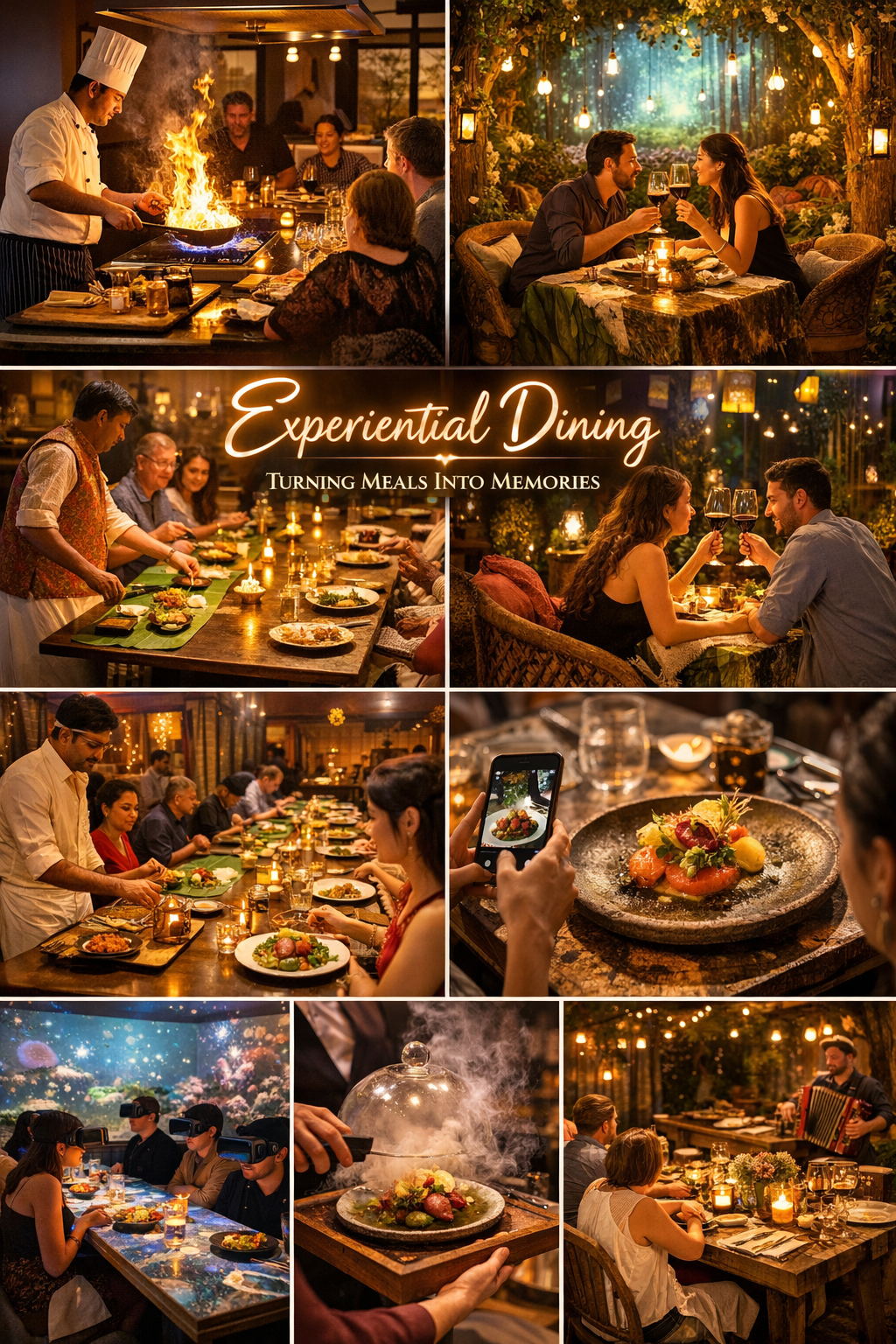
How Food Businesses Can Turn Meals into Memories
Experiential Dining is storytelling
In today’s competitive food industry, Experiential Dining is transforming the way restaurants attract and retain customers. Dining out is no longer just about satisfying hunger; it is about creating moments worth sharing. Experiential Dining focuses on emotions, ambiance, storytelling, and interaction, turning a simple meal into a lasting memory.
At its core, Experiential Dining is about engaging all five senses. From the lighting and music to the plating and aroma, every detail matters. Customers are looking for something unique—something they cannot easily replicate at home. This shift in consumer expectations has made Experiential Dining one of the most powerful strategies for modern food businesses.
One reason Experiential Dining is gaining momentum is the rise of social media culture. Guests love sharing visually stunning dishes, themed interiors, and immersive food events. When a restaurant invests in Experiential Dining, it creates Instagram-worthy moments that naturally promote the brand online. This organic visibility helps businesses expand their reach without relying solely on paid advertising.
Another key element of Experiential Dining is storytelling. People connect deeply with stories behind recipes, ingredients, and traditions. Whether it is a heritage recipe from a grandmother’s kitchen or a chef’s culinary journey, storytelling enhances Experiential Dining by adding emotional value to every bite. Customers feel more connected when they know the meaning behind the meal.
Ambiance plays a central role in Experiential Dining. The design of the space, seating layout, decor theme, and even staff uniforms contribute to the overall impression. For example, a South Indian restaurant can incorporate traditional brass utensils, temple-style decor, and live dosa counters to elevate Experiential Dining. The environment should complement the cuisine and strengthen the brand identity.
Interactive food preparation is another way to embrace Experiential Dining. Live cooking stations, chef’s tables, and DIY food platters allow guests to participate in the process. When customers become part of the experience, Experiential Dining feels personal and engaging. This involvement creates stronger memories compared to passive dining.
Themed dining nights are also popular in Experiential Dining strategies. Businesses can host regional food festivals, cultural evenings, or seasonal tasting menus. These events encourage repeat visits because customers are excited to explore something new. By consistently innovating, Experiential Dining keeps the brand fresh and relevant.
Personalization is a powerful driver of Experiential Dining. Customized menu recommendations, surprise birthday desserts, or handwritten thank-you notes can significantly enhance customer satisfaction. When guests feel recognized and valued, Experiential Dining becomes more meaningful and memorable.
Technology has further expanded opportunities for Experiential Dining. Digital menus with augmented reality previews, QR-based storytelling, and interactive projections can create immersive atmospheres. Restaurants that integrate technology thoughtfully can differentiate themselves through innovative Experiential Dining concepts.
Music and lighting should not be underestimated in Experiential Dining. Soft lighting for romantic dinners, upbeat playlists for brunch crowds, or cultural music during themed nights can dramatically influence mood. Sensory consistency strengthens Experiential Dining and ensures guests associate positive feelings with the brand.
Food presentation is another essential component of Experiential Dining. Artistic plating, unique serving ware, and creative garnishing elevate the perceived value of dishes. In many cases, customers remember how a dish looked as much as how it tasted. Strong visual appeal enhances Experiential Dining and increases shareability on social platforms.
Customer engagement before and after the visit also supports Experiential Dining. Sending personalized invitations to events, sharing behind-the-scenes content, or asking for feedback builds ongoing relationships. When the interaction extends beyond the table, Experiential Dining becomes a continuous journey rather than a single visit.
For small businesses, Experiential Dining does not require a massive budget. Simple ideas like hosting cooking workshops, offering tasting flights, or arranging chef interactions can create impactful moments. Even thoughtful table decor and warm hospitality contribute significantly to Experiential Dining.
Community involvement is another effective strategy within Experiential Dining. Collaborating with local artists, musicians, or farmers can add authenticity and freshness to events. These partnerships strengthen brand credibility and make Experiential Dining more dynamic and community-driven.
Seasonal menus are a practical way to maintain strong Experiential Dining appeal. Introducing limited-time dishes inspired by festivals or local produce keeps customers curious. When menus evolve regularly, Experiential Dining feels exciting and encourages repeat visits.
Staff training is crucial for delivering consistent Experiential Dining. Employees should understand the brand story, menu highlights, and service etiquette. Friendly, knowledgeable staff can elevate Experiential Dining by making guests feel comfortable and appreciated.
Emotional connection is the ultimate goal of Experiential Dining. Customers may forget prices, but they rarely forget how a place made them feel. By focusing on warmth, authenticity, and creativity, Experiential Dining turns first-time visitors into loyal advocates.
Marketing strategies should highlight the unique aspects of Experiential Dining. Instead of promoting only discounts, businesses can showcase immersive setups, live events, and behind-the-scenes preparation. Clear communication about the experience attracts customers who value meaningful dining.
Feedback and continuous improvement are essential in refining Experiential Dining. Listening to customer suggestions and observing behavior patterns help identify areas for enhancement. Successful Experiential Dining evolves based on real guest insights and market trends.
Ultimately, the future of the food industry belongs to brands that prioritize Experiential Dining. As competition increases, simply serving delicious food is not enough. Restaurants must craft environments, stories, and interactions that resonate deeply. By investing in Experiential Dining, food businesses can transform ordinary meals into unforgettable memories and build lasting emotional connections with their customers.
